
The Eisenhower Matrix: Deciding what matters most
The Eisenhower Matrix helps you prioritize tasks by urgency and importance. Learn how to use this classic 2x2 framework to focus on what matters most and cut the noise.
Dwight D. Eisenhower, the 34th president of the United States and a five-star general, once said, “What is important is seldom urgent, and what is urgent is seldom important.” From this simple insight comes one of the most enduring productivity frameworks: the Eisenhower Matrix. It’s a grid that helps you separate the noise from the signal, making it clearer which tasks to do, delegate, schedule, or drop.
What is the Eisenhower Matrix?
The matrix divides tasks into four quadrants:
Urgent and important (do it now): crises, deadlines, and pressing responsibilities.
Important but not urgent (schedule it): long-term planning, relationship building, health, personal growth.
Urgent but not important (delegate it): interruptions, minor requests, tasks that others can handle.
Neither urgent nor important (eliminate it): distractions, busywork, low-value habits.
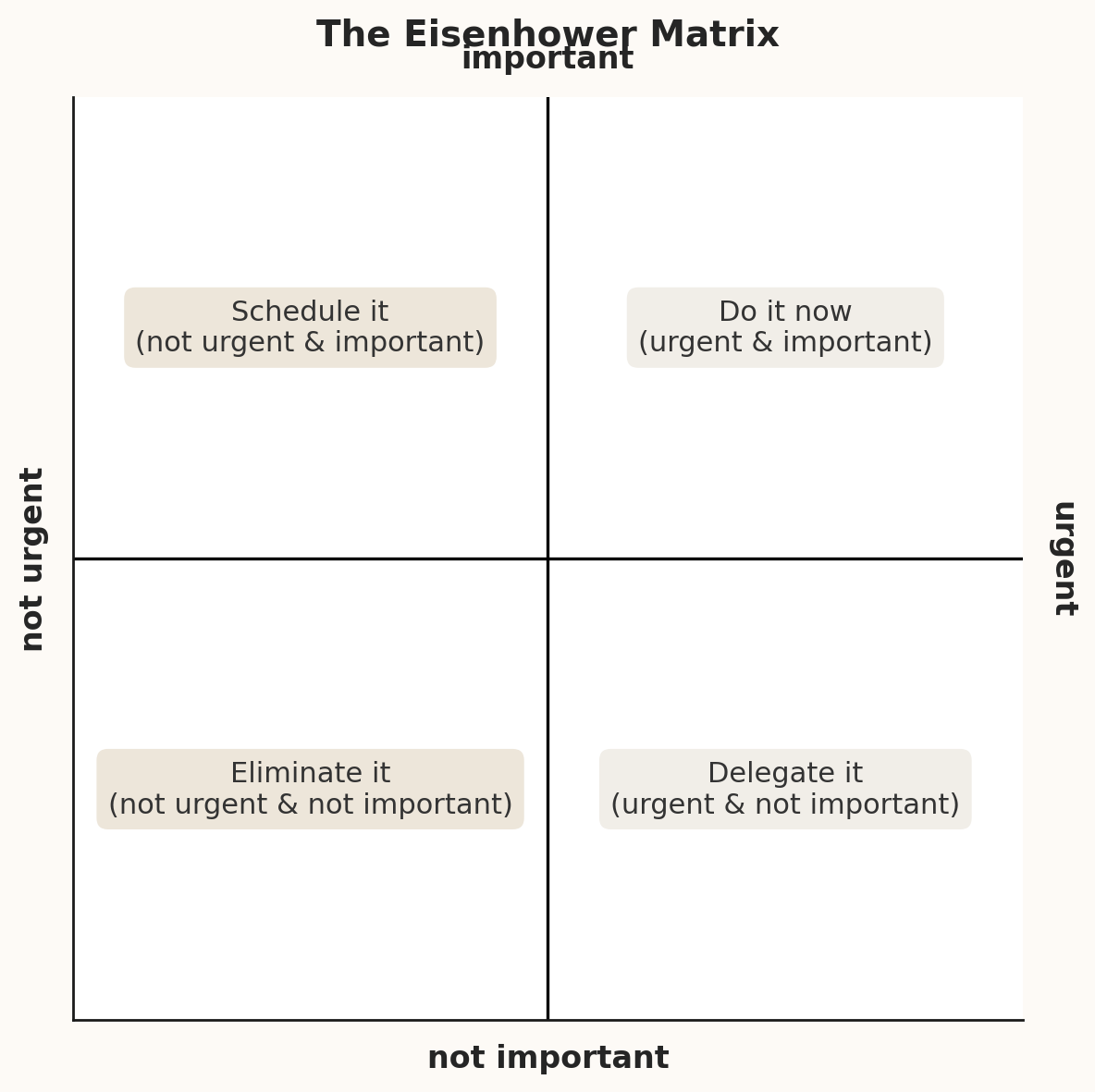
By categorizing tasks this way, you can stop reacting to whatever shouts the loudest and start acting on what truly matters.
Why it matters
Modern life is full of pings, alerts, and demands for instant responses. Without a system, urgency bias takes over — we spend our energy on whatever feels pressing while neglecting what’s meaningful. The Eisenhower Matrix interrupts this cycle by forcing us to pause and ask: Is this important, or just urgent?
That small shift reclaims time for the things that matter most: health, relationships, meaningful projects, and personal growth.
Examples in daily life
The developer
Quadrant 1: Fixing a critical bug (urgent and important)
Quadrant 2: Writing long-term technical documentation (important but not urgent)
Quadrant 3: Responding to Teams/Slack pings about minor preferences (urgent but not important) can be delegated.
Quadrant 4: Refactoring a rarely used feature just to make it cleaner (neither urgent nor important) can wait — or never get done.
The student
Quadrant 1: Studying for tomorrow’s test (urgent and important)
Quadrant 2: Building study habits for the next semester (important but not urgent)
Quadrant 3: Answering a group chat about class gossip (urgent but not important)
Quadrant 4: Scrolling TikTok before bed (neither urgent nor important)
The professional
Quadrant 1: Delivering a client presentation due today (urgent and important)
Quadrant 2: Networking over coffee with a mentor (important but not urgent)
Quadrant 3: Attending a meeting with no clear agenda (urgent but not important)
Quadrant 4: Bingeing emails that don’t require replies (neither urgent nor important)
Reflection prompts: Applying the Eisenhower Matrix
clarify your urgent vs. important
Think of today’s top three tasks. Which are urgent deadlines, and which are truly important for long-term growth?schedule your quadrant 2
What’s one “important but not urgent” task you’ve been postponing? Block time for it this week.delegate the noise
Which urgent tasks could be done by someone else? How can you free yourself from quadrant 3?eliminate quadrant 4
What low-value habit drains your time each day? How would your schedule feel without it?
Strategies to apply the matrix
Pause before you react. When something lands on your desk, ask which quadrant it belongs to before diving in.
Prioritize quadrant 2. The most overlooked tasks — like long-term planning, exercise, and relationship building — often yield the greatest return. Schedule them or they’ll never happen.
Be ruthless with quadrant 4. Eliminating low-value tasks frees up enormous mental energy.
Delegate quadrant 3. If someone else can do it, let them. Delegation is not shirking — it’s focusing.
Pro tip: draw a quick 2x2 grid in your journal each morning. Place the day’s tasks in the matrix before starting work.
The mindset shift
The Eisenhower Matrix is not about doing more. It’s about making better choices. By shifting attention away from urgency alone and toward importance, you start living proactively rather than reactively. Over time, this simple grid helps you invest more energy in growth, purpose, and fulfillment.
Your call to action
This week, sketch the Eisenhower Matrix in your journal. Each day, assign your top five tasks to one of the four quadrants. Notice how your focus shifts when you deliberately protect time for the “important but not urgent” work.